By Brother Walt Hampton
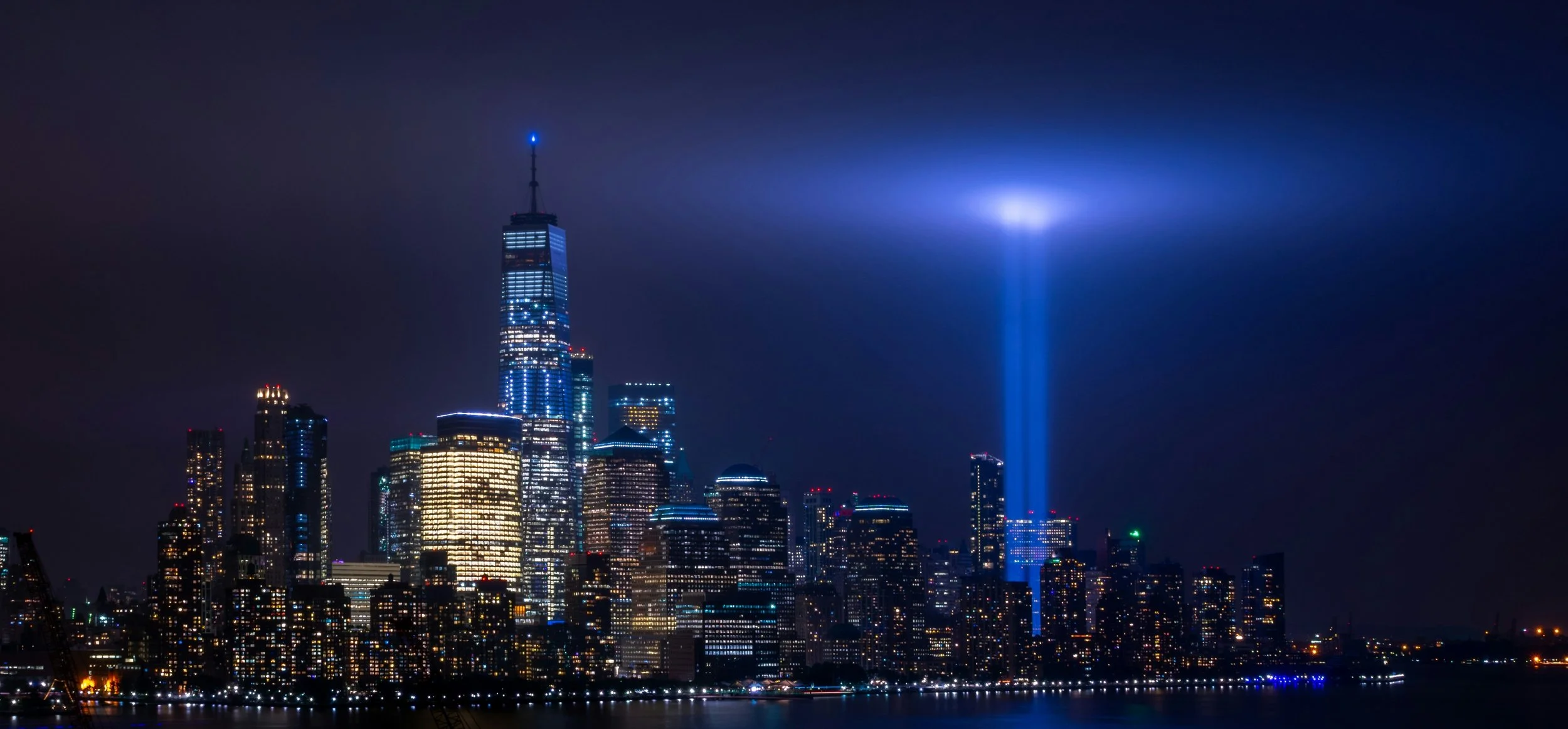
On September 11th this year, as I have done in years past, I’ll step to the microphone in my brown Franciscan habit, and lead the opening invocation for the Mount Washington Valley’s 9/11 Memorial. I’ll stand with neighbors, and friends, and strangers, and fellow clergy. We’ll recall the nearly 3,000 people who died. We’ll honor firefighters, police officers, EMTs and ordinary people who did extraordinary things. We’ll remember Flight 93. We’ll pray some more.
This year, though, I’ll carry another prayer with me. That our remembering might become more than memory. That it might become a reckoning with who we are now, and who we are called to be. Like many of you, I remember exactly where I was when the world changed.
I was at a legal conference outside of Hartford, Connecticut, sitting in the back row of a meeting room. I was nursing a cup of cold coffee and, truth be told, bored to tears. Then cell phones around the room began to buzz. Something was terribly wrong. The meeting stopped. People all started talking at once. Some ran for their cars. Others stood in hallways making calls. There were tears. Confusion. Disbelief.
I wanted only one thing. I wanted to get to my boys. I was a single dad back then. They were young and in school about 20 miles away. I remember getting into my car, turning on the radio and hearing reports that seemed impossible to comprehend. I had my cell phone in my hand, dialing and redialing the school, trying to get through. I counted the minutes until I could get home.
There finally, I held my boys. We watched the images again and again. The planes. The fire. The smoke. The towers falling. People running through streets covered in ash. I held them and I wept. In an instant, in an ordinary instant, everything had changed.
What emerged from the horror was extraordinary courage. Firefighters climbed stairwells while everyone else was trying to get down. Police officers, EMTs and medical workers moved toward danger. Passengers and crew aboard Flight 93 fought back against their hijackers, almost certainly preventing another attack and sacrificing their own lives in the process.
One of those who ran toward the suffering was my Franciscan brother Father Mychal Judge, chaplain to the New York City Fire Department. He entered the World Trade Center complex to minister to firefighters and victims. He died there.
I’ve written about Brother Mychal before because his life embodies something at the heart of the Franciscan tradition: In the midst of suffering, he moved closer. There was something else I remember about those days: People reached for one another.
Neighbors checked on neighbors. Strangers embraced. Houses of worship opened their doors. People stood in line to give blood. First responders came from across the country. For a while, many of the categories we use to separate ourselves seemed less important. Republican or Democrat. Liberal or conservative. Believer or nonbeliever. We were frightened and grieving, but we also understood, however briefly, that we belonged to one another.
I don’t want to romanticize that time. The unity wasn’t universal. Muslim Americans were subjected to suspicion, harassment and violence. Sikh Americans were attacked because people mistook them for Muslims, now villainized. Fear became fertile ground for policies of surveillance and detention. Wars followed, with enormous human costs. And some of the choices our country made in the aftermath of September 11 remain deeply contested.
Memory needs honesty if it is going to teach us anything. Still, there was something real in the way so many people responded to the immediate horror. The instinct wasn’t only to flee. It was also to help. To comfort. To serve. To show up for someone else. That’s the part of September 11th that I’m afraid we’ve forgotten. “Never forget” has become almost a sacred phrase in American life. We inscribe it on memorials. We put it on signs and bumper stickers. We say it every September.
But what exactly have we promised never to forget? Twenty-five years later, America is profoundly divided. A Reuters/Ipsos poll released for this anniversary found that Americans are now considerably more worried about violence from domestic extremists than from foreign terrorists. Sixty-one percent said ideology-driven attacks from within the United States pose the greater threat.
I felt such sadness when I saw that poll. The terror of September 11th came from people who had been taught to see other human beings as enemies, abstractions and acceptable casualties in service of an ideology. Twenty-five years later, we increasingly speak about one another in ways that travel disturbingly close to the same moral terrain.
Our political opponents become enemies. Immigrants become invaders. Jews and Muslims become objects of suspicion. Transgender people become political targets rather than neighbors with names and families and fears. People on the other side of almost any question are caricatured before they are understood.
Even empathy has become suspect in some quarters of our public life. Caring too much about the suffering of another person can now be dismissed as weakness or naïveté. That should trouble all of us, regardless of who we are, where we live, what party we belong to, or what God we believe in.
Jesus didn’t command his followers to love the people who agreed with them. He told them to love their neighbors. Then, as if that weren’t difficult enough, he told them to love their enemies too. That’s not just sentimental religion. It may be among the most demanding political teachings ever uttered. Love doesn’t require us to pretend there is no injustice. Reconciliation doesn’t mean silence in the face of cruelty. Peace is not passive acceptance of whatever people in power decide to do.
In my own Franciscan tradition, being an instrument of peace means entering places of conflict without becoming captive to the hatred that created the conflict in the first place. Francis of Assisi did exactly that. In the middle of the Crusades, he crossed enemy lines and met Sultan al-Kamil of Egypt. He went without an army. He went willing to encounter another human being whom his culture had taught him to regard as an enemy. Eight centuries later, that still feels radical.
The world of this 25th anniversary is hardly at peace. Wars continue in Ukraine and the Middle East. The United States is again engaged in a widening military conflict with Iran, prompting comparisons with the long wars that followed September 11th. Antisemitism is resurgent. Islamophobia persists. Political violence and civil war feel increasingly imaginable in a country where it once would have seemed unthinkable. So perhaps this anniversary needs to become something more than remembrance. Perhaps “never forget” means remembering who we are capable of being.
We saw what that looked like back then, We saw it in firefighters climbing stairways carrying equipment that weighed almost as much as they did. We saw it in passengers aboard an airplane over Pennsylvania who knew what was likely to happen and acted anyway. We saw it in Brother Mychal moving toward frightened firefighters because they needed a priest. We saw it in countless strangers helping strangers.
In my invocation this year, I will pray that we will remember how, “in the midst of the smoke and rubble, love kept showing up.” That’s our work, friends. In every time and every place, we are called to show up with love.
There’s an ancient vision in the Book of Isaiah of a people beating their swords into plowshares and their spears into pruning hooks. I’ve always loved that image because it isn’t about throwing the weapons away. It’s about transforming them. Taking the instruments we created for destruction and turning them into tools that nourish life.
Showing up with love doesn’t happen by accident. It appears when people decide that another person’s life matters enough to move toward them, care for them, protect them, or simply refuse to abandon them.
Twenty-five years from now, there will be another September 11th anniversary. Many of those gathering to remember it will have no living memory of that clear Tuesday morning in 2001. They’ll know it only from photographs, recordings and the stories we leave them.
What will we tell them we did with our memory? I hope we can tell them that somewhere along the way we remembered that our lives are bound together. That disagreement didn’t require contempt. That patriotism didn’t require suspicion of the stranger. That faith did not require demonizing someone else’s faith. That justice and reconciliation weren’t enemies.
I hope we can tell them that we finally understood what those who ran toward the burning buildings were showing us: that our lives belong to one another. So on this twenty-fifth anniversary, perhaps “never forget” can mean more than remembering what happened. Perhaps it can mean remembering what love asked of us then, and what it still asks of us now.